[1] The photo of the outfit: https://share.google/mHJbchlsTNJ771yBa
EDIT: After reading the prompt translation, this was more just like a “year of the horse is going to nail white engineers in glorious rendered detail” sort of prompt. I don’t know how SD1.5 would have rendered it, and I think I’ll skip finding out
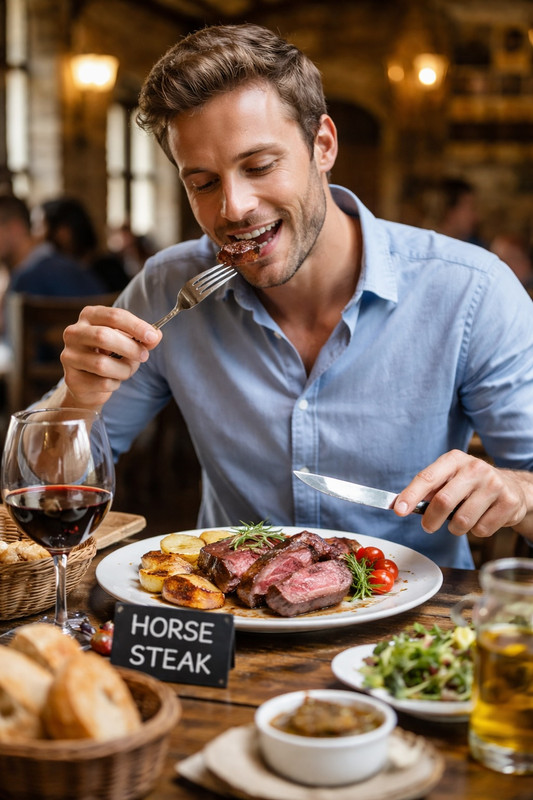
From the article it seems the name is 马启仁, not 马骑人 so the guy's name sounds the same as 'horse riding man', but that's not a literal translation of his name.
He also claimed that LLMs were a failure because of prompts that GPT 3.5 couldn't parse, after the launch of GPT-4,which handled them with aplomb.
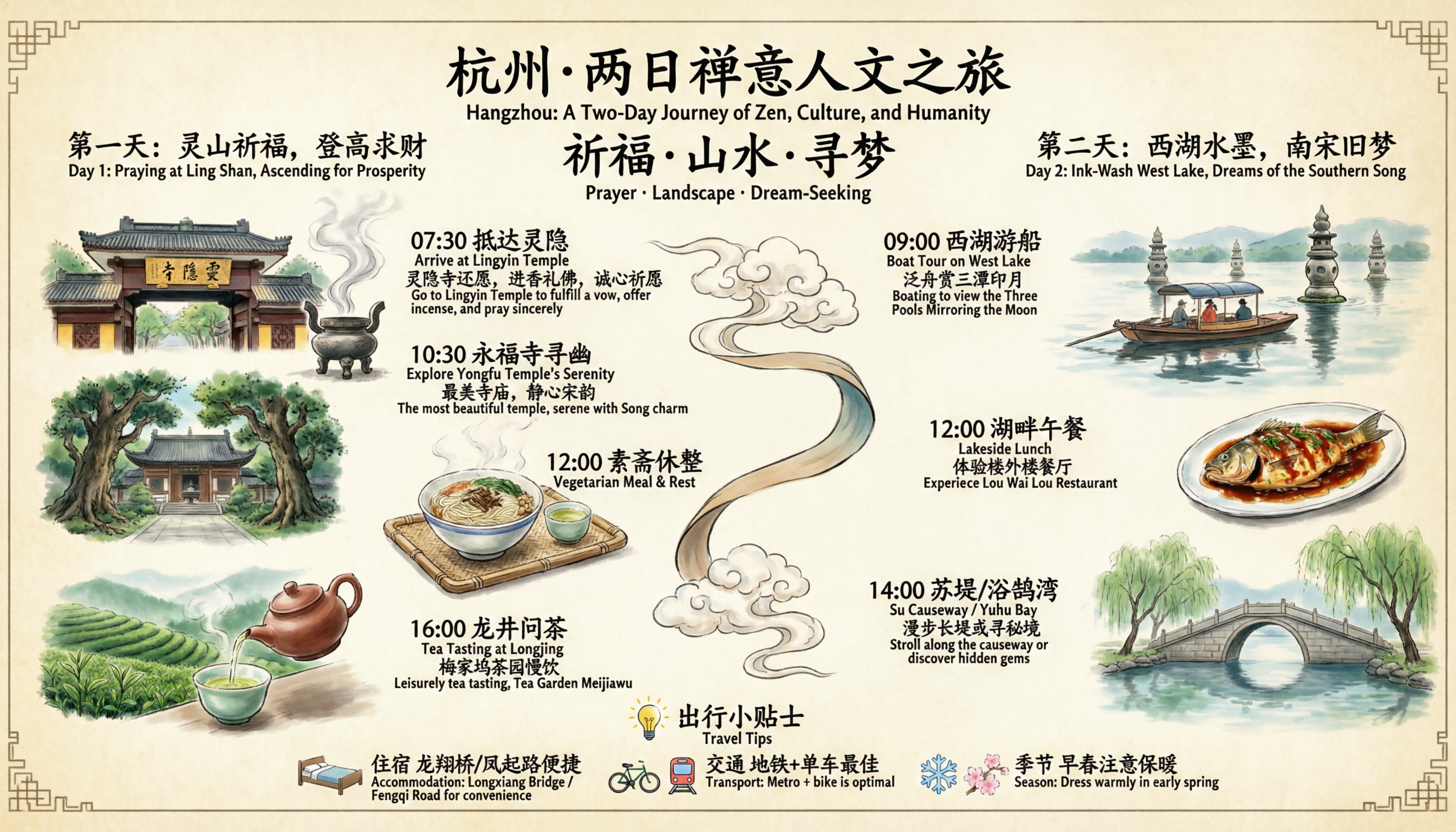
For example I think there would be a lot of businesses in the US that would be too afraid of backlash to use AI generated imagery for an itinerary like the one at https://qianwen-res.oss-accelerate-overseas.aliyuncs.com/Qwe...
Ha! An American would have no such qualms.
this is sending me, I don't know what's funnier, this translation being accurate or inaccurate
This problem is infamous because it persisted (unlike other early problems, like creating the wrong number of fingers) for much more capable models, and the Qwen Image people are certainly very aware of this difficult test. Even Imagen 4 Ultra, which might be the most advanced pure diffusion model without editing loop, fails at it.
And obviously an astronaut is similar to a man, which connects this benchmark to the Chinese meme.
But on the one picture that honestly looks like a man getting ass-raped by a horse, it's a white man.
I mean even in the west where you can hardly see an ad with a white couple anymore, they don't go that far (at least not yet).
White people are a minority on earth and anti-white racism sure seems to be alive and well (btw my family is of all the colors and we speak three languages at home, so don't even try me).
You act as though they first decided to make an image representing Westerners and then chose that particular scene as an intentional insult, but you need to consider that they likely made thousands of test images, most of which were just playing around with the model's capabilities and not specifically crafted for the announcement post.
So why did this one get picked? I think it boils down to the visual gag being funny and the movie-like quality.
Which is really apt because in Serbian "konj", or horse, is a colloquial word for moron. So, horses riding people is a perfect representation of the reality of the Serbian government.
Another fun fact, the parliament building in HL2's City 17 was modelled from that building.
1. I’d wager that given their previous release history, this will be open‑weight within 3-4 weeks.
2. It looks like they’re following suit with other models like Z-Image Turbo (6B parameters) and Flux.2 Klein (9B parameters), aiming to release models that can run on much more modest GPUs. For reference, the original Qwen-Image is a 20B-parameter model.
3. This is a unified model (both image generation and editing), so there’s no need to keep separate Qwen-Image and Qwen-Edit models around.
4. The original Qwen-Image scored the highest among local models for image editing in my GenAI Showdown (6 out of 12 points), and it also ranked very highly for image generation (4 out of 12 points).
Generative Comparisons of Local Models:
https://genai-showdown.specr.net/?models=fd,hd,kd,qi,f2d,zt
Editing Comparison of Local Models:
https://genai-showdown.specr.net/image-editing?models=kxd,og...
I'll probably be waiting until the local version drops before adding Qwen-Image-2 to the site.
Qwen 2512 (December edition of Qwen Image)
* 19B parameters, which was a 40GB file at FP16 and fit on a 3090 at FP8. Anything less than that and you were in GGUF format at Q6 to Q4 quantizations… which were slow, but still good quality.
* used Qwen 2.5 VL. So a large model and a very good vision model.
* And iirc, their own VAE. Which had known and obvious issues of high frequency artifacts. Some people would take the image and pass it through another VAE like WAN Video model’s or upscale-downscale to remove these
Qwen 2 now is
* a 7B param model. Right between Klein 9B (non-commercial) this (license unknown), Z-Image 7B (Apache), and Klein 4B (Apache). Direct competition, will fit on many more GPUs even at FP16.
* upgrades to Qwen 3 VL, I assume this is better than the already great 2.5 VL.
* Unknown on the new VAE. Flux2’s new 128 channel VAE is excellent, but it hasn’t been out long enough for even a frontier Chinese model to pick up.
Overall, you’re right this is on the trend to bring models on to lower end hardware.
Qwen was already excellent and now they rolled Image and Edit together for an “Omni” model.
Z-Image was the model to beat a couple weeks ago… and now it looks like both Klein and Qwen will! Z-Image has been disappointing to see how it just refuses to adhere to multiple new training concepts. Maybe they tried to pack it too tightly.
Open weights for this will be amazing. THREE direct competitors all vying to be “SDXL2” at the same time.
The Qwen convention was confusing! You had Image, 2509, Edit, 2511 (Edit), 2512 (Image) and then the Lora compatibility was unspecified. It’s smart to just 2.0 this mess.
I'm really looking forward to running the unified model through its paces.
If I were to guess, I would say that Z-Image’s life is shorter than it initially appeared. Even as a refiner which are just workarounds for model issues.
What's interesting is that the bottleneck is no longer the model — it's the person directing it. Knowing what to ask for and recognizing when the output is good enough matters more than which model you use. Same pattern we're seeing in code generation.
I want the ability to lean into any image and tweak it like clay.
I've been building open source software to orchestrate the frontier editing models (skip to halfway down), but it would be nice if the models were built around the software manipulation workflows:
The fight right now outside of API SOTA is who will replace SDXL to be the “community preference”
It’s now a three way between Flux2 Klein, Z-Image, and now Qwen2.
In my (very personal) opinion, they're part of a very small group of organizations that sell inference under a sane and successful business model.
I was a mod on MJ for its first few years and got to know MJ's founder through discussions there. He already had "enough" money for himself from his prior sale of Leap Motion to do whatever he wanted. And, he decided what he wanted was to do cool research with fun people. So, he started MJ. Now he has far more money than before and what he wants to do with it is to have more fun doing more cool research.
1. real time world models for the "holodeck". It has to be fast, high quality, and inexpensive for lots of users. They started on this two years ago before "world model" hype was even a thing.
2. some kind of hardware to support this.
David Holz talks about this on Twitter occasionally.
Midjourney still has incredible revenue. It's still the best looking image model, even if it's hard to prompt, can't edit, and has artifacting. Every generation looks like it came out of a magazine, which is something the other leading commercial models lack.
Even something like Flux.1 Dev which can be run entirely locally and was released back in August of 2024 has significantly better prompt understanding.
How. By magic? You fell for 'Deepseek V3 is as good as SOTA'?
What Linux tools are you guys using for image generation models like Qwen's diffusion models, since LMStudio only supports text gen.
Sad state of affairs and seems they're enshittifying quicker than expected, but was always a question of when, not if.
Engine:
* https://github.com/LostRuins/koboldcpp/releases/latest/
Kcppt files:
Other people gave you the right answer, ComfyUI. I’ll give you the more important why and how…
There is a huge effort of people to do everything but Comfy because of its intimidating barrier. It’s not that bad. Learn it once and be done. You won’t have to keep learning UI of the week endlessly.
The how, go to civitai. Find an image you like, drag and drop it into comfy. If it has a workflow attached, it will show you. Install any missing nodes they used. Click the loaders to point to your models instead of their models. Hit run and get the same or a similar image. You don’t need to know what any of the things do yet.
If for some reason that just does not work for you… Swarm UI, is a front end too comfy. You can change things and it will show you on the comfy side what they’re doing. It’s a gateway drug to learning comfy.
EDIT: most important thing no one will tell you out right… DO NOT FOR ANY REASON try and skip the VENV or miniconda virtual environment when using comfy! You must make a new and clean setup. You will never get the right python, torch, diffusers, driver, on your system install.
LinkedIn is filled with them now.
Much like the pointless ASCII diagrams in GitHub readmes (big rectangle with bullet points flows to another...), the diagrams are cognitive slurry.
See Gas Town for non-Qwen examples of how bad it can get:
https://news.ycombinator.com/item?id=46746045
(Not commenting on the other results of this model outside of diagramming.)
Thank you for this phrase. I don't think that bad diagrams are limited to the AI in any way and this perfectly describes all "this didn't make things any clearer" cases.
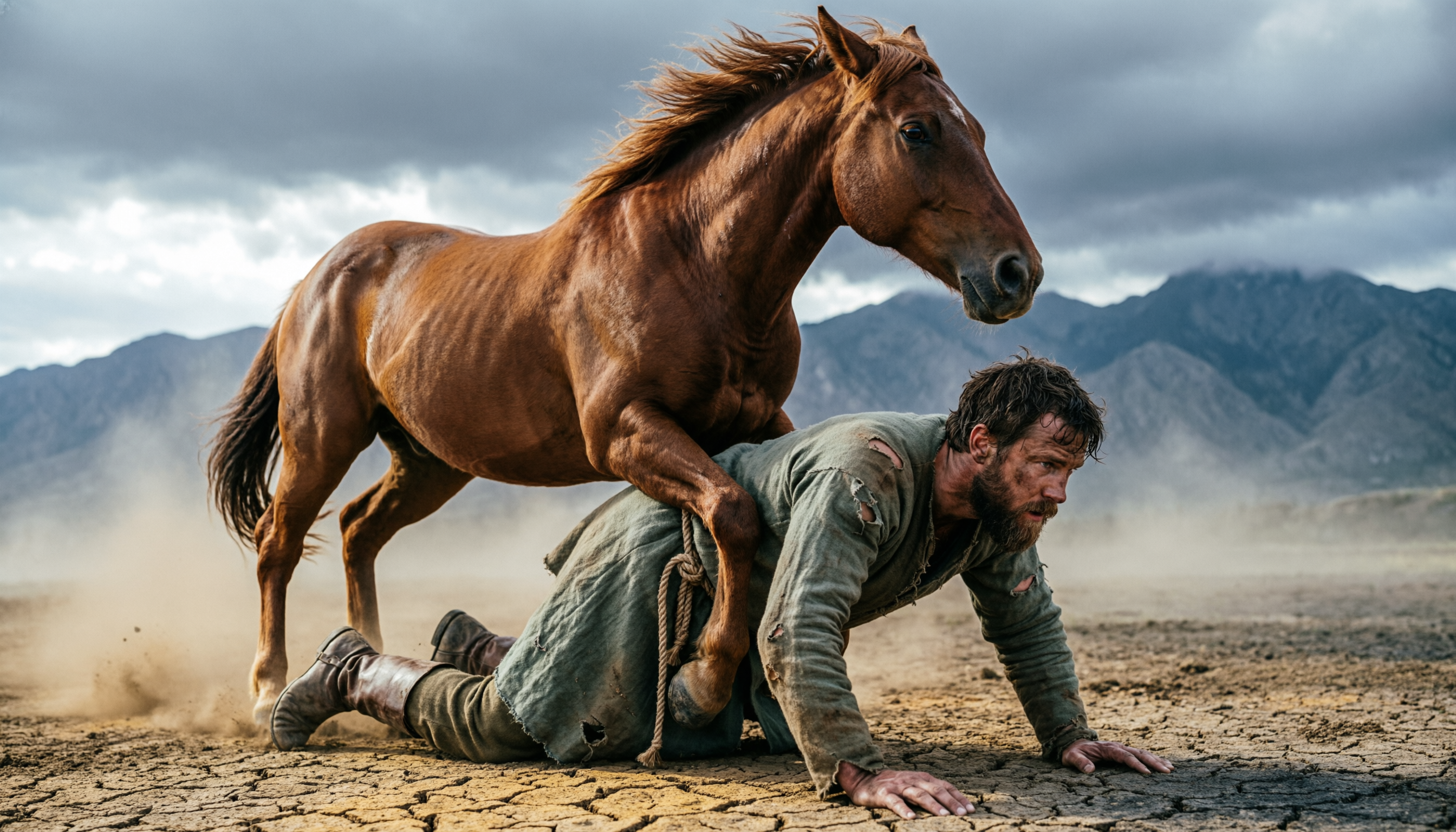
"""A desolate grassland stretches into the distance, its ground dry and cracked. Fine dust is kicked up by vigorous activity, forming a faint grayish-brown mist in the low sky. Mid-ground, eye-level composition: A muscular, robust adult brown horse stands proudly, its forelegs heavily pressing between the shoulder blades and spine of a reclining man. Its hind legs are taut, its neck held high, its mane flying against the wind, its nostrils flared, and its eyes sharp and focused, exuding a primal sense of power. The subdued man is a white male, 30-40 years old, his face covered in dust and sweat, his short, messy dark brown hair plastered to his forehead, his thick beard slightly damp; he wears a badly worn, grey-green medieval-style robe, the fabric torn and stained with mud in several places, a thick hemp rope tied around his waist, and scratched ankle-high leather boots; his body is in a push-up position—his palms are pressed hard against the cracked, dry earth, his knuckles white, the veins in his arms bulging, his legs stretched straight back and taut, his toes digging into the ground, his entire torso trembling slightly from the weight. The background is a range of undulating grey-blue mountains, their outlines stark, their peaks hidden beneath a low-hanging, leaden-grey, cloudy sky. The thick clouds diffuse a soft, diffused light, which pours down naturally from the left front at a 45-degree angle, casting clear and voluminous shadows on the horse's belly, the back of the man's hands, and the cracked ground. The overall color scheme is strictly controlled within the earth tones: the horsehair is warm brown, the robe is a gradient of gray-green-brown, the soil is a mixture of ochre, dry yellow earth, and charcoal gray, the dust is light brownish-gray, and the sky is a transition from matte lead gray to cool gray with a faint glow at the bottom of the clouds. The image has a realistic, high-definition photographic quality, with extremely fine textures—you can see the sweat on the horse's neck, the wear and tear on the robe's warp and weft threads, the skin pores and stubble, the edges of the cracked soil, and the dust particles. The atmosphere is tense, primitive, and full of suffocating tension from a struggle of biological forces."""
When I used the exact prompt the post - the chat works. It gives me the exact output from the blog post.
Then I used Google Translate to understand the prompt format. The prompt is: A 4x6 panel comic, four lines, six panels per line. Each panel is separated by a white dividing line.
The first row, from left to right: Panel 1: Panel 2: .....
and when I try to change the inputs the comic example fails miserably. It keeps creating random grids - sometimes 4x5 other times 4x6 but then by third row the model will get confused and the output has only 3 panels. Other times English dialogue is replaced with Chinese dialogue. so, not very reliable in my books.
(I don’t even know if I’m being sarcastic)
""" A desolate grassland stretches into the distance, its ground dry and cracked. Fine dust is kicked up by vigorous activity, forming a faint grayish-brown mist in the low sky. Mid-ground, eye-level composition: A muscular, robust adult brown horse stands proudly, its forelegs heavily pressing between the shoulder blades and spine of a reclining man. Its hind legs are taut, its neck held high, its mane flying against the wind, its nostrils flared, and its eyes sharp and focused, exuding a primal sense of power. The subdued man is a white male, 30-40 years old, his face covered in dust and sweat, his short, messy dark brown hair plastered to his forehead, his thick beard slightly damp; he wears a badly worn, grey-green medieval-style robe, the fabric torn and stained with mud in several places, a thick hemp rope tied around his waist, and scratched ankle-high leather boots; his body is in a push-up position—his palms are pressed hard against the cracked, dry earth, his knuckles white, the veins in his arms bulging, his legs stretched straight back and taut, his toes digging into the ground, his entire torso trembling slightly from the weight. The background is a range of undulating grey-blue mountains, their outlines stark, their peaks hidden beneath a low-hanging, leaden-grey, cloudy sky. The thick clouds diffuse a soft, diffused light, which pours down naturally from the left front at a 45-degree angle, casting clear and voluminous shadows on the horse's belly, the back of the man's hands, and the cracked ground. The overall color scheme is strictly controlled within the earth tones: the horsehair is warm brown, the robe is a gradient of gray-green-brown, the soil is a mixture of ochre, dry yellow earth, and charcoal gray, the dust is light brownish-gray, and the sky is a transition from matte lead gray to cool gray with a faint glow at the bottom of the clouds. The image has a realistic, high-definition photographic quality, with extremely fine textures—you can see the sweat on the horse's neck, the wear and tear on the robe's warp and weft threads, the skin pores and stubble, the edges of the cracked soil, and the dust particles. The atmosphere is tense, primitive, and full of suffocating tension from a struggle of biological forces. """
But if you translate the actual prompt the term riding doesn't even appear. The prompt describes the exact thing you see in excruciating detail.
"... A muscular, robust adult brown horse standing proudly, its forelegs heavily pressing between the shoulder blades and spine of a reclining man ... and its eyes sharp and focused, exuding a primal sense of power. The subdued man is a white male, 30-40 years old, his face covered in dust and sweat ... his body is in a push-up position—his palms are pressed hard against the cracked, dry earth, his knuckles white, the veins in his arms bulging, his legs stretched straight back and taut, his toes digging into the ground, his entire torso trembling slightly from the weight ..."
Yeah, as they go through their workflow earlier in the blog post, that prompt they share there seems to be generated by a different input, then that prompt is passed to the actual model. So the workflow is something like "User prompt input -> Expand input with LLMs -> Send expanded prompt to image model".
So I think "human riding a horse" is the user prompt, which gets expanded to what they share in the post, which is what the model actually uses. This is also how they've presented all their previous image models, by passing user input through a LLM for "expansion" first.
Seems poorly thought out not to make it 100% clear what the actual humanly-written prompt is though, not sure why they wouldn't share that upfront.
What the actual fuck
---
A desolate grassland stretches into the distance, its ground dry and cracked. Fine dust is kicked up by vigorous activity, forming a faint grayish-brown mist in the low sky.
Mid-ground, eye-level composition: A muscular, robust adult brown horse stands proudly, its forelegs heavily pressing between the shoulder blades and spine of a reclining man. Its hind legs are taut, its neck held high, its mane flying against the wind, its nostrils flared, and its eyes sharp and focused, exuding a primal sense of power. The subdued man is a white male, 30-40 years old, his face covered in dust and sweat, his short, messy dark brown hair plastered to his forehead, his thick beard slightly damp; he wears a badly worn, grey-green medieval-style robe, the fabric torn and stained with mud in several places, a thick hemp rope tied around his waist, and scratched ankle-high leather boots; his body is in a push-up position—his palms are pressed hard against the cracked, dry earth, his knuckles white, the veins in his arms bulging, his legs stretched straight back and taut, his toes digging into the ground, his entire torso trembling slightly from the weight.
The background is a range of undulating grey-blue mountains, their outlines stark, their peaks hidden beneath a low-hanging, leaden-grey, cloudy sky. The thick clouds diffuse a soft, diffused light, which pours down naturally from the left front at a 45-degree angle, casting clear and voluminous shadows on the horse's belly, the back of the man's hands, and the cracked ground.
The overall color scheme is strictly controlled within the earth tones: the horsehair is warm brown, the robe is a gradient of gray-green-brown, the soil is a mixture of ochre, dry yellow earth, and charcoal gray, the dust is light brownish-gray, and the sky is a transition from matte lead gray to cool gray with a faint glow at the bottom of the clouds.
The image has a realistic, high-definition photographic quality, with extremely fine textures—you can see the sweat on the horse's neck, the wear and tear on the robe's warp and weft threads, the skin pores and stubble, the edges of the cracked soil, and the dust particles. The atmosphere is tense, primitive, and full of suffocating tension from a struggle of biological forces.
I assume our brains are used to stuff which we dont notice conciously, and reject very mild errors. I've stared at the picture a bit now and the finger holding the baloon is weird. The out of place snowman feels weird. If you follow the background blur around it isnt at the same depth everywehere. Everything that reflects, has reflections that I cant see in the scene.
I dont feel good staring at it now so I had to stop.
Like focus stacking, specifically.
I’m always surprised when people bother to point out more-subtle flaws in AI images as “tells”, when the “depth-of-field problem” is so easily spotted, and has been there in every AI image ever since the earliest models.
But I found that that results in more professional looking images, and not more realistic photos.
Adding something like "selfy, Instagram, low resolution, flash" can lead to a .. worse image that looks more realistic.
[0] I think I did this one with z image turbo on my 4060 ti
My personal mechanistic understanding of diffusion models is that, "under the hood", the core thing they're doing, at every step and in every layer, is a kind of apophenia — i.e. they recognize patterns/textures they "know" within noise, and then they nudge the noise (least-recognizable pixels) in the image toward the closest of those learned patterns/textures, "snapping" those pixels into high-activation parts of their trained-in texture-space (with any text-prompt input just adding a probabilistic bias toward recognizing/interpreting the noise in certain parts of the image as belonging to certain patterns/textures.)
I like to think of these patterns/textures that diffusion models learn as "brush presets", in the Photoshop sense of the term: a "brush" (i.e. a specific texture or pattern), but locked into a specific size, roughness, intensity, rotation angle, etc.
Due to the way training backpropagation works (and presuming a large-enough training dataset), each of these "brush presets" that a diffusion model learns, will always end up learned as a kind of "archetype" of that brush preset. Out of a collection of examples in the training data where uses of that "brush preset" appear with varying degrees of slightly-wrong-size, slightly-wrong-intensity, slightly-out-of-focus-ness, etc, the model is inevitably going to learn most from the "central examples" in that example cluster, and distill away any parts of the example cluster that are less shared. So whenever a diffusion model recognizes a given one of its known brush presets in an image and snaps pixels toward it, the direction it's moving those pixels will always be toward that archetypal distilled version of that brush preset: the resultant texture in perfect focus, and at a very specific size, intensity, etc.
This also means that diffusion models learn brushes at distinctively-different scales / rotation angles / etc as entirely distinct brush presets. Diffusion models have no way to recognize/repair toward "a size-resampled copy of" one of their learned brush presets. And due to this, diffusion models will never learn to render in details small enough that the high-frequency components of of their recognizable textural-detail would be lost below the Nyquist floor (which is why they suck so much at drawing crowds, tiny letters on signs, etc.) And they will also never learn to recognize or reproduce visual distortions like moire or ringing, that occur when things get rescaled to the point that beat-frequencies appear in their high-frequency components.
Which means that:
- When you instruct a diffusion model that an image should have "low depth-of-field", what you're really telling it is that it should use a "smooth-blur brush preset" to paint in the background details.
- And even if you ask for depth-of-field, everything in what a diffusion model thinks of as the "foreground" of an image will always have this surreal perfect focus, where all the textures are perfectly evident.
- ...and that'll be true, even when it doesn't make sense for the textures to be evident at all, because in real life, at the distance the subject is from the "camera" in the image, the presumed textures would actually be so small as to be lost below the Nyquist floor at anything other than a macro-zoom scale.
These last two problems combine to create an effect that's totally unlike real photography, but is actually (unintentionally) quite similar to how digital artists tend to texture video-game characters for "tactile legibility." Just like how you can clearly see the crisp texture of e.g. denim on Mario's overalls (because the artist wanted to make it feel like you're looking at denim, even though you shouldn't be able to see those kinds of details at the scaling and distance Mario is from the camera), diffusion models will paint anything described as "jeans" or "denim" as having a crisply-evident denim texture, despite that being the totally wrong scale.
It's effectively a "doll clothes" effect — i.e. what you get when you take materials used to make full-scale clothing, cut tiny scraps of those materials to make a much smaller version of that clothing, put them on a doll, and then take pictures far closer to the doll, such that the clothing's material textural detail is visibly far larger relative to the "model" than it should be. Except, instead of just applying to the clothing, it applies to every texture in the scene. You can see the pores on a person's face, and the individual hairs on their head, despite the person standing five feet away from the camera. Nothing is ever aliased down into a visual aggregate texture — until a subject gets distant enough that the recognition maybe snaps over to using entirely different "brush preset" learned specifically on visual aggregate textures.
Also Imagen 4 and Nano Banana Pro are very different models.
But anyway, realistic environments like a street cafe are not suited to test for photorealism. You have to use somewhat more fantastical environments.
I don't have access to z-image, but here are two examples with Nano Banana Pro:
"A person in the streets of Atlantis, portrait shot." https://i.ibb.co/DgMXzbxk/Gemini-Generated-Image-7agf9b7agf9...
"A person in the streets of Atlantis, portrait shot (photorealistic)" https://i.ibb.co/nN7cTzLk/Gemini-Generated-Image-l1fm5al1fm5...
These are terribly unrealistic. Far more so than the Flux.2 Pro image above.
> Also Imagen 4 and Nano Banana Pro are very different models.
No, Imagen 4 is a pure diffusion model. Nano Banana Pro is a Gemini scaffold which uses Imagen to generate an initial image, then Gemini 3 Pro writes prompts to edit the image for much better prompt alignment. The prompts above a very simple, so there is little for Gemini to alter, so they look basically identical to plain Imagen 4. Both pictures (especially the first) have the signature AI look of Imagen 4, which is different from other models like Imagen 3.
By the way, here is GPT Image 1.5 with the same prompts:
"A person in the streets of Atlantis, portrait shot." https://i.ibb.co/Df8nDHFL/Chat-GPT-Image-10-Feb-2026-14-17-1...
"A person in the streets of Atlantis, portrait shot (photorealistic)" https://i.ibb.co/Nns4pdGX/Chat-GPT-Image-10-Feb-2026-14-17-2...
The first is very fake and the second is a strong improvement, though still far from the excellent cafe shots above (fake studio lighting, unrealistic colors etc).
I disagree, nano banana pro result is on a completely different league compare to flux.2 and z-image.
>But anyway, realistic environments like a street cafe are not suited to test for photorealism
Why? It's the perfect settings in my opinion.
Btw I don't think you are using nano banana pro, probably standard nano banana, I'm getting this from your prompt: https://i.ibb.co/wZHx0jS9/unnamed-1.jpg
>Nano Banana Pro is a Gemini scaffold which uses Imagen to generate an initial image, then Gemini 3 Pro writes prompts to edit the image for much better prompt alignment.
First of all how should you know the architecture details of gemini-3-pro-image, second of all how the model can modify the image if gemini itself is just rewriting the prompt (like old chatgpt+dalle), imagen 4 is just a text-to-image model, not an editing one, it doesn't make sense, nano banana pro can edit images (like the ones you can provide).
I strongly disagree. But even if you are right, the difference between the cafe shots and the Atlantis shots is clearly much, much larger than the difference between the different cafe shots. The Atlantis shots are super unrealistic. They look far worse than the cafe shots of Flux.2 Pro.
> Why? It's the perfect settings in my opinion
Because it's too easy obviously. We don't need an AI to make fake realistic photos of realistic environments when we can easily photograph those ourselves. Unrealistic environments are more discriminative because they are much more likely to produce garbage that doesn't look photorealistic.
> Btw I don't think you are using nano banana pro, I'm getting this from your prompt: https://i.ibb.co/wZHx0jS9/unnamed-1.jpg
I'm definitely using Nano Banana Pro, and your picture has the same strong AI look to it that is typical of NBP / Imagen 4.
> First of all how should you know the architecture details of gemini-3-pro-image, second of all how the model can modify the image if gemini itself is just rewriting the prompt (like old chatgpt+dalle), imagen 4 is just a text-to-image model, not an editing one, it doesn't make sense, nano banana pro can edit images (like the ones you can provide).
There were discussions about it previously on HN. Clearly NBP is using Gemini reasoning, and clearly the style of NBP strongly resembles Imagen 4 specifically. There is probably also a special editing model involved, just like in Qwen-Imahe-2.0.
Still the vast majority of models fail at delivery an image that looks real, I want realism for a realistic settings, if it can't do that than what's the point. Of course you can always pay people and equipment to make the perfect photo for you ahah
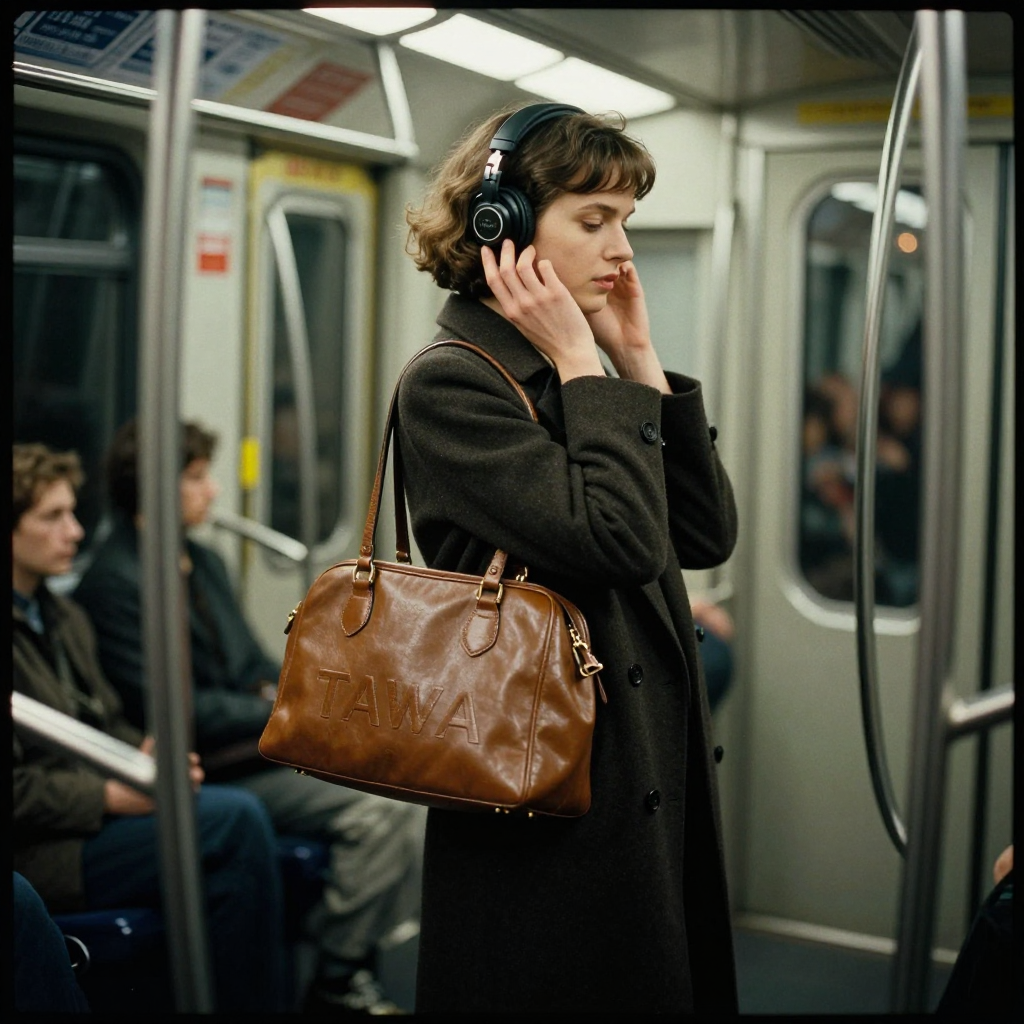
If the image of z-image turbo looks as good as the nano banana pro one for you, you are probably too used to slop that a model that do not produce obvious artifacts like super shiny skin it's immediately undistinguishable from a real image (like the nano banana pro one that to me looks as real as a real photo) and yes I'm ignoring the fact that in the z-image-turbo the cup is too large and the bag is inside the chair. Z-image is good (in particular given its size) but not as good.
Yes, and it has a very unrealistic AI look to it. That was my point.
> You haven't posted a z-image one of Atlantis.
Yes, I don't doubt that it might well be just as unrealistic or even worse. I also just tried the Atlantis prompts in Grok (no idea what image model they use internally) and they look somewhat more realistic, though not on cafe level.
A muscular, robust adult brown horse stands proudly, its forelegs heavily pressing between the shoulder blades and spine of a reclining man. Its hind legs are taut, its neck held high, its mane flying against the wind, its nostrils flared, and its eyes sharp and focused, exuding a primal sense of power. The subdued man is a white male...
Do western AI models mostly default to white people?
Embarrassing image? I'm white, why would I be embarrassed over that image? It's a computer generated image with no real people in it, how could it be embarrassing for alive humans?
In another post you talked about people getting mad at the image without context What context are we missing exactly. I do not feel ill informed or angry. But I could indeed be missing something, can you explain the context? If you where to say it's because of the LLM adding more context then that could be plausible, but why the medieval and hemp-rope? I know how sensitive the western companies have been on their models getting rid of negative racial stereo-types, going as far as to avoid and modify certain training data, would you accept an LLM producing negative stereotypes or tending to put one particular racial group into a submissive situation then others?
I really do feel like the idea that the LLM would just take the prompt A human male being ridden by a horse to include all those other details and go straight for a darker, somber tone and expression and a dynamic of domination and submission rather then a more humorous description, unlikely.
Why? I don't see that. Are black people embarrassed if a black person commits a crime, yet not embarrassed if a white person commits a crime? That sounds very contrived to me and not at all how things work in reality.
> If ones own race is being denigrated then one may indeed feel embarrassment
I also don't understand this. Why would every white person feel any sort of embarrassment over images denigrating white people? Feel hate, anger or lots of other emotions, that'd make sense. But I still don't understand why "embarrassment" or shame is even on the table, embarrassment over what exactly? That there are racists?
My comment was to try and highlight this is the point of various racist depictions and that if one is powerless then indeed this can become an embarrassing shame. Maybe it's the case that you do not see it that way, but in any kind of bondage that a group of people are subject to, shame, embarrassment will follow along with many other feelings. I was not say a white person should be embarrassed and I don't think 'goga-piven' was. rather they could be manifestations of contempt or other hostile emotions on the authors part.
>Why? I don't see that. Are black people embarrassed if a black person commits a crime, yet not embarrassed if a white person commits a crime? That sounds very contrived to me and not at all how things work in reality.
I did not make a point about black people being embarrassed at black people committing a crime, I was more thinking the kind of collective guilt some German people speak of for Nazism, I made not prescriptive claims on the shame or embarrassment only that these are ways that people do behave.
> I also don't understand this. Why would every white person feel any sort of embarrassment over images denigrating white people? Feel hate, anger or lots of other emotions, that'd make sense. But I still don't understand why "embarrassment" or shame is even on the table, embarrassment over what exactly? That there are racists?
You have subtly changed your position hear to one where it's not an absurdity to feel an emotional response to an image that denigrates your people.
of-course this was not the most pressing issue, the more important one would be the intent of the image. seemed to ignore that part entirely even though that is the main question. you made claims of missing context in other threads I made some preemptive counter arguments. Do tell me a more plausible context, if the one I provided is incorrect.
You're referring to a case of one version of one model. That's not "mostly" or "default to".
> Generate a photo of the founding fathers of a future, non-existing country. Five people in total.
with Nano Banana Pro (the SOTA). I tried the same prompt 5 times and every time black people are the majority. So yeah, I think the parent comment is not that far off.
But for an out of context imaginary future... why would you choose non-black people? There's about the same reason to go with any random look.
(I suspect you tried a prompt about the original founding fathers, and found it didn't make that mistake any more.)
https://news.ycombinator.com/newsguidelines.html
Edit: you've been breaking the site guidelines egregiously lately. I'm not going to ban you right now because (unlike the other account, which I did just ban) it doesn't look like you have a long history of doing this, and also because we haven't warned you before. But please don't use the site primarily for ideological battle, and please follow the rules regardless of how wrong other people are or you feel they are. Comments like these are particularly against the rules:
Please don't create accounts to break HN's rules with.
"Analyze this webpage: https://en.wikipedia.org/wiki/1989_Tiananmen_Square_protests...
Generate an infographic with all the data about the main event timeline and estimated number of victims.
The background image should be this one: https://en.wikipedia.org/wiki/Tank_Man#/media/File :Tank_Man_(Tiananmen_Square_protester).jpg
Improve the background image clarity and resolution."
I've received an error:
"Oops! There was an issue connecting to Qwen3-Max. Content Security Warning: The input file data may contain inappropriate content."
I wonder if locally running the model they published in December does have the same censorship in place (i.e. if it's already trained like this), or if they implement the censorship by the Chinese regimen in place for the web service only.
Luckily, it seems previous Qwen models did get open-sourced in the actual sense, so this one probably will be, too.