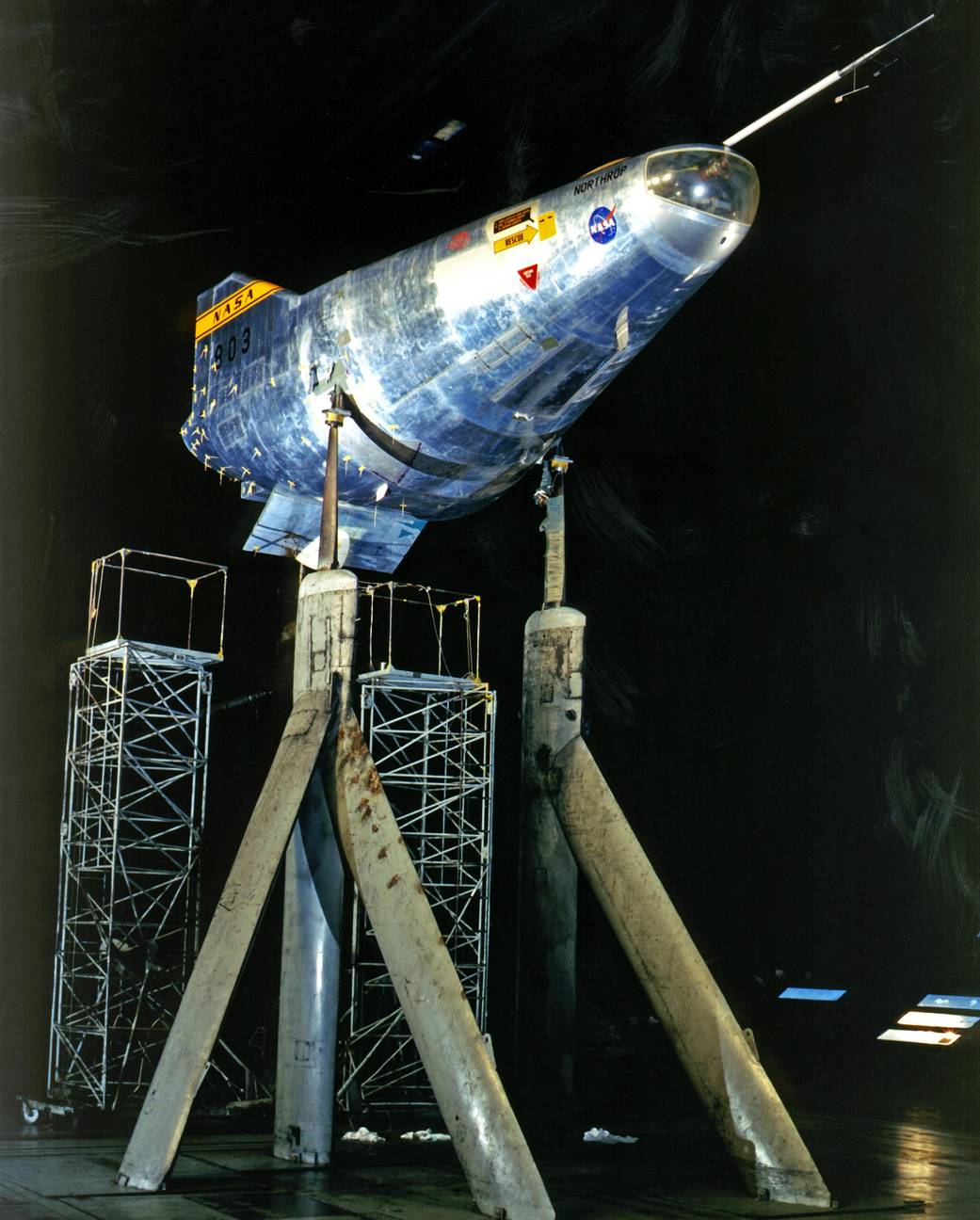
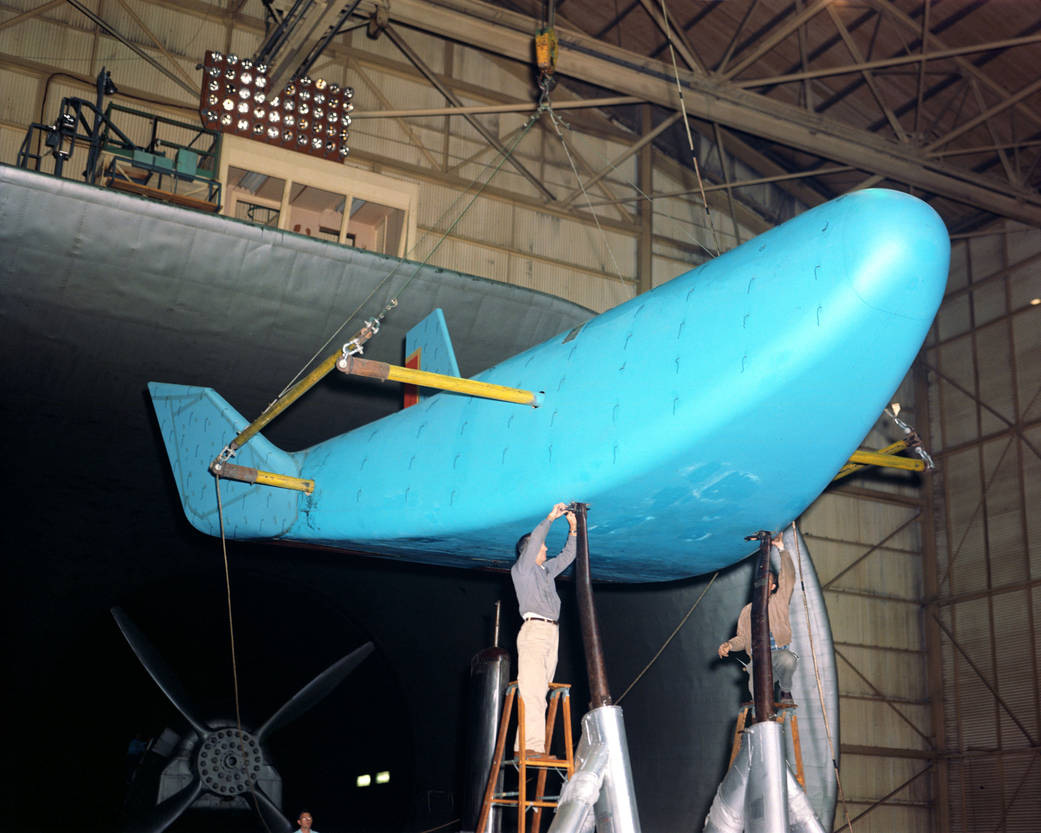
When I was a kid, my friend's dad was an engineer at Grumman, and he took us to see a test in their supersonic wind tunnel. The most prominent memory, is how unbelievably loud it was, and the next most prominent memory was that all the engineers were jealous of Lockheed, who had a much better wind tunnel that could run for much longer tests.
In 2014 I went to the open house event that NASA Ames had in honor of their 75th anniversary. They had the giant 80 by 120 foot wind tunnel open for viewing from the outside and I had a very hard time comprehending the visual size of it because the only scale references I had were the square lights on the ceiling. It was an experience that stuck with me. A few years prior I lived in Sunnyvale and even several miles away you could tell when it was operating because of the low rumble of sound.
I discovered a few years ago that a such a wind tunnel facility existed in my area (France), but at a smaller scale. I had the opportunity to visit it. The facility is about 100 years old. What amazed me is not just the facilities (they have various tunnels for different measurements), but how it adapted to customer usages through time as engineering needs evolve. One building was initially designed for seaplanes but has long ago been refurbished for other uses. Another one is used by the French cycling team which has headquarters nearby.
The NASA Langley stability wind tunnel [0] is now part of Randolph Hall at Virginia Tech. You can visit it in Blacksburg, VA. Beautiful campus, btw. The stability tunnel is the biggest, they also have smaller hypersonic tunnels and
I worked there as a work-study student. Part of the job was wiping down the tunnel chamber after their test runs. The smoke you see used in wind tunnel videos is not actually smoke, but a white oil. And for a FWS job the pay wasn't bad, had to put on a bunny suit and crawl around tight spaces, LOL.
Magnetically levitating the model in the tunnel and measuring the forces by measuring how the magnets need to be driven to keep the model in place is pretty cool.
CFD is actually really difficult to get "right". Really tiny changes to simulation setup (mesh sizing, boundary conditions, solver choice, etc) can make big changes to the final results, it's honestly more of an art than a science for very complex simulations. The simulation will converge on any number of setups, but that doesn't guarantee your setup is a valid estimation of reality. So scale model testing is still a great validation of your CFD.
> Both errors could have been caught before launch if Boeing had performed more thorough software testing on the ground, according to John Mulholland, vice president and manager of Boeing’s CST-100 Starliner program.
> Mulholland said Boeing engineers performed testing of Starliner’s software in chunks, with each test focused on a specific segment of the mission. Boeing did not perform an end-to-end test of the entire software suite, and in some cases used stand-ins, or emulators, for flight computers.
Cheaping out cost billions and nearly two astronauts.
In addition to the other comments, I just want to point out that we _do_ do a tremendous amount of CFD. The Pleiades supercomputer [0] sits in a building just down the street from the large wind tunnel at Ames Research Center, is generally ranked somewhere in the top 150 supercomputers in the world, and is largely used for CFD work to complement the wind tunnel work.
There are lots of things to test besides basic aerodynamics. And even for that sometimes you want real data to validate models before building the full size thing.
Things that are tested/validated in wind tunnels nowadays: effect of different paint and coatings, engine inlet flow, noise, tunned mass dampers, effect of placement of sensors, control surface flutter.
Simply because theory (computational) only gets you so far. As much as we'd like to think we have perfectly modeled everything, most of our models are just very good approximations
Reminds me of the old construction photos for nuclear reactors in the US. Astoundingly complex machines at a massive scale getting out together at what now feels like impossible speed. I can't help but feel like a Roman 100 years after the fall staring up at aqueducts wondering how anyone every built such a thing.
I'm positive someone could show me an impressive thing we built recently. I don't feel like that is my point. Im just astounded those people in that time could build what they built with the tools they had as fast as they did.
We can build amazing things today too, but we have a lot higher standards and a lot more requirements than they did, which makes everything take longer time.
Outside my office window an enormous new new warehouse was erected in just a few weeks, but it is just a huge box with no added extras so it can't have been very hard to do
One thing that changed is that modern engineering moved a lot of complexity from the construction site into the design phase. A project today may take longer because we simulate, certify, model failures, and optimize before pouring concrete. The old projects sometimes had more visible physical labor, but less computational overhead.
Engineering developed a government entwined professional licensure system and used that to capture value that was previously the domain of the construction industry.
This also introduces massive potential for bike shedding, nitpicking, stalling, etc which of course costs us all.